


Views: 0
BIN3AIAH GAMES • GAMING HISTORY • FEATURE ARTICLE
The Evolution of Racing Video Games: From Arcade Classics to Ultra-Realistic Simulations


7
From simple pixelated circuits in the 1970s to highly detailed racing simulations with realistic vehicle physics, racing video games have undergone one of the most remarkable transformations in gaming history.
Today’s players can drive legendary supercars, compete on accurately recreated racing circuits, experience changing weather conditions, and race opponents around the world—all without leaving home.
But how did racing games develop into the experiences we know today?
1. The 1970s: The birth of racing video games


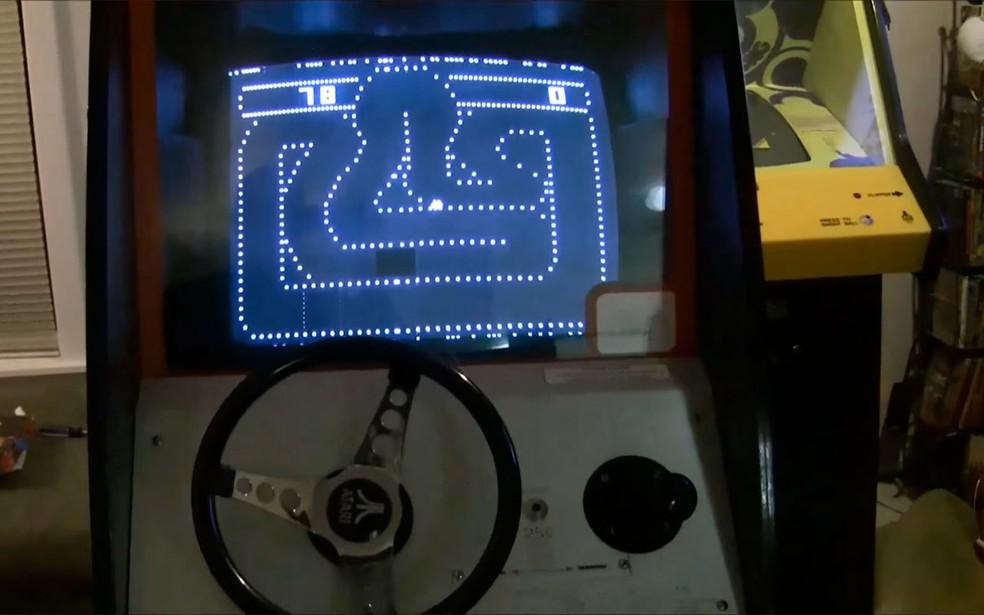
One of the earliest milestones was Atari’s Gran Trak 10, released in 1974. The game challenged players to navigate a simple circuit using a steering wheel, accelerator, and brake.
Its monochrome graphics were primitive by modern standards, but its physical controls helped establish the driving-game formula.
Guinness World Records
+1
During this era, racing games focused on basic steering, time limits, avoiding obstacles, and achieving high scores. There was little emphasis on realistic car handling.
2. The 1980s: The golden age of arcade racing

Namco’s Pole Position (1982) brought racing games closer to real motorsport. Players completed qualifying laps, competed against rival vehicles, and used braking and gear changes to improve their performance.
The decade also introduced landmark games such as Out Run (1986), famous for its Ferrari-inspired sports car, branching roads, colorful scenery, and memorable music.
Late-1980s games including Winning Run (1988) began demonstrating how polygonal 3D graphics could reshape racing experiences.
Guinness World Records
+1
3. The 1990s: The 3D revolution
The 1990s saw a dramatic transformation as racing games adopted three-dimensional graphics, more sophisticated controls, and increasingly varied driving experiences.


Super Mario Kart (1992)
Popularized accessible kart racing with power-ups, memorable characters, and competitive multiplayer.


Daytona USA (1994)
Demonstrated the excitement of fast polygonal 3D arcade racing, with recognizable stock cars and competitive tracks.


Gran Turismo (1997)
Established a new standard for console driving realism, featuring real-world automobiles, vehicle upgrades, and a structured simulation mode.
The original Gran Turismo, released in Japan on December 22, 1997, featured 140 cars and became a defining milestone for realistic racing games.
gran-turismo.com
+1
4. The 2000s: Customization, street racing, and simulation


8
The 2000s broadened the genre considerably. Racing games increasingly offered detailed vehicle customization, career progression, advanced damage systems, and online multiplayer.
Need for Speed: Underground (2003) and Underground 2 (2004) helped popularize tuner-car culture through street racing, neon-lit urban environments, and visual modification.
Burnout 3: Takedown (2004) emphasized spectacular crashes and aggressive competition, while Forza Motorsport (2005) offered a more simulation-oriented experience on Xbox, with over 230 cars, vehicle customization, and structured racing events.

Celebrating 20 Years of Racing
+1
This decade established two powerful identities in the genre: accessible arcade entertainment and more technical driving simulation.
5. The 2010s: Racing simulators become serious motorsport platforms


7
As processing power increased, racing simulators began modeling vehicle dynamics with extraordinary detail.
Titles such as iRacing, Assetto Corsa, and Assetto Corsa Competizione focused on authentic tire behavior, suspension response, aerodynamic forces, track conditions, and organized competitive racing.
iRacing, launched in August 2008, grew into an influential online motorsport platform with competitive matchmaking and driver progression. Assetto Corsa Competizione, officially released in 2019, brought detailed GT racing simulation, laser-scanned circuits, and dynamic weather.
iRacing.com Motorsport Simulations
+2
Meanwhile, open-world franchises such as Forza Horizon made racing more accessible, combining car collecting, exploration, and automotive culture.
6. The 2020s: Virtual reality, esports, and stunning realism


10
Modern racing games increasingly blur the distinction between virtual entertainment and real-world motorsport.
Gran Turismo 7 (2022) offers realistic vehicle modeling, immersive audio, sophisticated driving physics, and PlayStation VR2 support. Forza Motorsport (2023) continued emphasizing circuit racing, vehicle handling, and detailed environments.
PlayStation (United Arab Emirates)
+2
Modern racing simulators also benefit from sophisticated steering wheels, force-feedback systems, load-cell pedals, and motion-enabled cockpits.
These advances allow players to feel more of the physical information that real racing drivers use, although home simulations still cannot reproduce every force experienced inside an actual race car.
Racing video game milestones
| Year | Game | Historical significance |
|---|---|---|
| 1974 | Gran Trak 10 | Early arcade driving controls |
| 1982 | Pole Position | Popularized Formula-style racing |
| 1986 | Out Run | Iconic arcade road racing |
| 1992 | Super Mario Kart | Influential kart-racing formula |
| 1994 | Daytona USA | Major 3D arcade racing milestone |
| 1997 | Gran Turismo | Advanced console driving simulation |
| 2003 | NFS: Underground | Street racing and tuning culture |
| 2005 | Forza Motorsport | Xbox circuit-racing simulation |
| 2008 | iRacing | Organized online sim racing |
| 2012 | Forza Horizon | Open-world festival racing |
| 2019 | Assetto Corsa Competizione | Dedicated modern GT simulation |
| 2022 | Gran Turismo 7 | Modern driving realism and VR support |
7. What comes next for racing video games?
The next generation of racing games may be shaped by several important technologies:
- Artificial intelligence: More adaptive computer-controlled opponents and race strategy.
- Advanced vehicle physics: Improved simulation of tires, damage, road surfaces, and weather.
- Virtual and mixed reality: Greater immersion through head tracking and spatial awareness.
- Connected competition: Expanded esports, leagues, and cross-platform racing communities.
- More accessible simulators: Better driving assists and affordable hardware that help newcomers experience simulation racing.
These are potential directions rather than guaranteed features of any particular upcoming title.
8. From video games to real racing careers
The relationship between gaming and motorsport has grown beyond entertainment.
The GT Academy initiative, launched in 2008 through Nissan and PlayStation, demonstrated that talented virtual racers could be developed into professional racing drivers.
PlayStation (US)
Racing simulators are also used for learning circuits, practicing racing lines, understanding vehicle behavior, and developing racecraft. While virtual skill does not automatically translate to professional driving ability, racing games have become valuable tools within the broader motorsport world.
Conclusion
The evolution of racing video games reflects the wider development of gaming technology.
What began as a handful of pixels moving around simple tracks has become a sophisticated world of virtual motorsport, automotive discovery, global competition, and realistic driving experiences.
Whether you prefer the accessible excitement of Mario Kart, the open roads of Forza Horizon, or the precision of Assetto Corsa Competizione, racing games offer something for every kind of driver.
And with continued advances in simulation technology, the virtual roads of tomorrow may become even more convincing.
Media package for Bin3aiah Games
Suggested video coverage — official searches, not yet selected or embedded.

Gran Turismo 7 — Official gameplay
Modern graphics, cars, and driving technology


Forza Motorsport — Official gameplay
Circuit racing and simulation improvements

Assetto Corsa Competizione — Gameplay
Realistic GT racing and professional simulation
SEO and publishing details
SEO Title
The Evolution of Racing Video Games: 1970s to Today
URL Slug
evolution-of-racing-video-games
Meta Description
Explore the evolution of racing video games, from Atari arcade classics and Gran Turismo to Forza Motorsport, iRacing and realistic modern simulators.
Focus Keywords
racing video games history, evolution of racing games, racing simulators, Gran Turismo history, Forza Motorsport, arcade racing games
Category
Gaming History / Racing Games
Copy SEO package
Suggested featured image: A three-era comparison featuring an early arcade racing game, a classic PlayStation racing title, and a modern photorealistic motorsport simulator.
Media note: The article includes visual references, but image reuse rights and video embedding permissions have not yet been verified. Publication to games.bin3aiah.net has not been performed.
Editorial status: Article drafted • SEO prepared • Media sourcing pending • Not published