


Views: 12
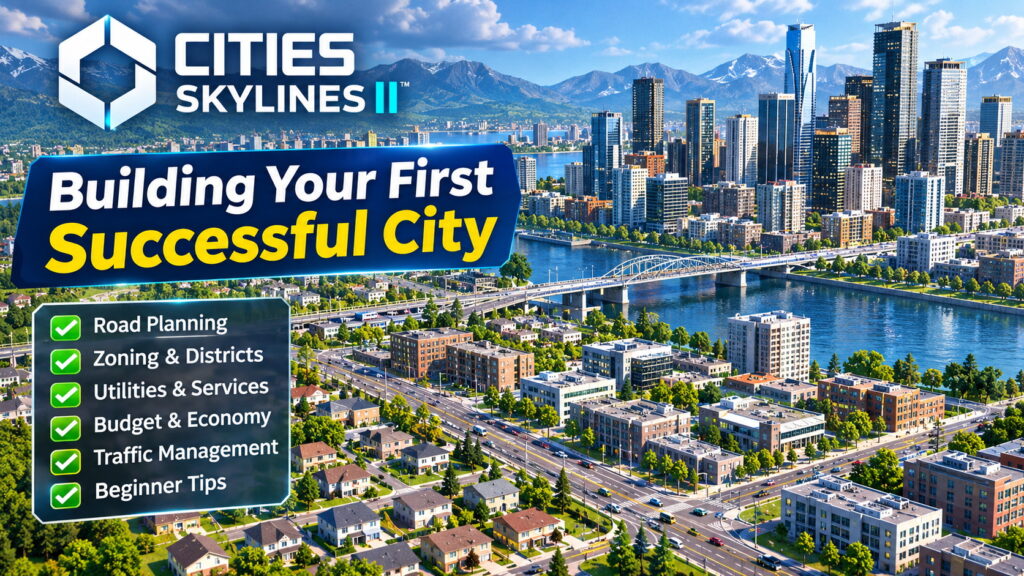
Cities: Skylines II: Building Your First Successful City
Cities: Skylines II is a detailed city-building simulation that challenges players to create and manage a thriving city. From constructing roads and planning residential neighborhoods to managing public services and transportation, every decision influences the future of your city.
For beginners, the biggest challenge is balancing growth with financial stability. Building too quickly can create traffic congestion, pollution, unemployment, and expensive maintenance costs.
In this guide, you will learn how to plan your first city, manage its economy, and establish the foundations for long-term success.


1. Choose the Right Map for Your First City
Your first important decision is selecting a map. Each map presents different terrain, climate conditions, natural resources, and transportation connections.
For your first city, prioritize relatively flat terrain, convenient highway access, and suitable locations for water infrastructure. These features make early development simpler and reduce the need for expensive construction projects.
What Makes a Good Beginner Map?
- Large areas of relatively flat land.
- Easy access to an existing highway connection.
- Enough space for residential and industrial districts.
- Accessible water resources or suitable groundwater supplies.
- Room for future expansion and public transportation.
Beginner tip: Avoid developing difficult mountain slopes or constructing major bridges unless they are genuinely necessary. Keep your first development compact.
2. Build a Smart Road Network
Road planning is one of the most important parts of building a successful city. A poorly designed network can create congestion, increase travel times, and interfere with services.


Start with a simple road layout connected to the outside highway. Use larger roads for important traffic corridors, medium-sized roads to connect districts, and smaller streets within neighborhoods.
Recommended Road Hierarchy
- Arterial roads: Carry large volumes of traffic between important districts.
- Collector roads: Connect neighborhoods with major roads.
- Local streets: Provide access to individual properties.
- Highways: Handle regional traffic and major connections.
Try to avoid placing numerous intersections too close together on major roads. Allow enough space for future expansion and consider creating alternative routes between districts.
Beginner tip: A modest road network with good connections is usually more efficient than an oversized network built before the population needs it.
3. Understand Residential, Commercial, and Industrial Zoning
Zoning determines how your city develops. In Cities: Skylines II, different zoning categories serve different purposes and respond to the needs of residents and businesses.
| Zone Type | Purpose | Best Location |
|---|---|---|
| Residential | Provides homes for citizens | Quiet neighborhoods with service access |
| Commercial | Creates shopping and service businesses | Accessible areas near customers |
| Industrial | Supports production, employment, and goods | Near transport connections, away from housing |
| Office | Provides office-based employment | Accessible districts with suitable workers |
Begin with low-density residential zoning, a limited amount of commercial space, and industrial areas that can provide employment.
Follow the game’s zoning demand indicators. Avoid filling the entire map with buildings before demand supports additional development.
Keep Pollution Away From Residential Areas
Industrial districts can generate ground, air, and noise pollution. Keep pollution-producing buildings away from homes and sensitive services. Consider wind direction when planning industrial locations.
4. Establish Electricity, Water, and Sewage Services
Reliable utilities are essential for a functioning city. Without adequate electricity, drinking water, and sewage management, your buildings cannot operate effectively.
Before expanding your population, establish an appropriate power supply, connect water infrastructure, and provide wastewater treatment or disposal.
Electricity
Choose a suitable electricity source based on available funds, operating costs, environmental impact, and capacity. Outside electricity connections may also be useful when available.
Water Supply
Use water pumping stations or suitable groundwater sources to supply clean drinking water. Check water availability and quality before placing facilities.
Sewage
Provide enough wastewater processing or disposal capacity. When using surface-water outlets, consider the direction of water flow and keep sewage away from drinking-water intakes.
Beginner tip: Check utility capacity regularly. Population growth can increase demand faster than expected.
5. Control Your City’s Budget
Financial management is one of the biggest differences between a city that grows successfully and one that struggles to survive.
Every new road, public building, and service can create additional expenses. Expanding too aggressively may cause recurring costs to exceed income.
How to Maintain a Healthy Economy
- Monitor the budget and recurring expenses frequently.
- Build public services when there is a demonstrated need.
- Expand residential and employment areas gradually.
- Adjust taxes carefully and monitor their effects.
- Avoid constructing expensive infrastructure too early.
- Check whether service buildings are being used efficiently.
Do not rely indefinitely on milestone rewards or temporary financial support. Aim for a sustainable operating budget that can support future expansion.
6. Provide Essential City Services
Citizens expect access to education, healthcare, emergency services, and other public facilities. These services influence quality of life and support urban development.
Important Public Services
- Healthcare: Helps maintain the health of residents.
- Education: Improves workforce qualifications and supports economic development.
- Fire protection: Responds to fires and helps protect buildings.
- Police: Supports public safety and crime management.
- Waste management: Collects and processes garbage.
- Deathcare: Manages the city’s deathcare needs.
Place facilities where they can serve the population effectively. Before building another facility, use the game’s information views to evaluate existing capacity and coverage.
Beginner tip: Service buildings may have staffing, operating expenses, and efficiency considerations. More facilities do not automatically mean better service.
7. Manage Traffic Before Congestion Becomes a Problem
As your population grows, more citizens and delivery vehicles travel throughout the city. Without proper planning, busy intersections and highway connections can become serious bottlenecks.


Practical Traffic Management Tips
- Provide alternative roads between important districts.
- Separate industrial freight traffic from residential streets when possible.
- Avoid too many intersections along major roads.
- Distribute commercial activity across accessible locations.
- Introduce public transportation when demand justifies it.
- Use traffic information views to investigate congestion.
Public transportation can eventually reduce dependence on private cars. Bus routes are a useful starting point, while larger systems can support denser districts as your city develops.
Beginner tip: Widening roads is not always the best solution. Sometimes changing an intersection or providing another route is more effective.
8. Develop Education and Employment Opportunities
A successful city needs both housing and employment opportunities. Residents need access to jobs, while businesses require workers with appropriate skills.
Education plays an important role in workforce development. As more advanced industries and office businesses appear, access to suitable educational facilities becomes increasingly important.
Monitor unemployment and available jobs before introducing large new employment districts.
9. Expand Your City Gradually
Once your first neighborhood operates successfully, you can begin developing additional districts.
Instead of building an enormous city all at once, expand in stages. This approach makes it easier to identify problems with the budget, roads, utilities, and public services.
A Simple Expansion Strategy
- Build a small residential neighborhood.
- Add nearby commercial services and accessible employment.
- Establish reliable electricity, water, and sewage systems.
- Check the economy and essential public services.
- Improve road connections where needed.
- Add a second neighborhood when demand supports it.
- Introduce more advanced services and public transportation.
- Develop higher-density districts as the city matures.
10. Common Beginner Mistakes to Avoid
| Common Mistake | Better Solution |
|---|---|
| Building too many roads immediately | Construct only what the current city needs |
| Placing factories next to housing | Separate pollution-producing industry |
| Ignoring the budget | Monitor income and recurring expenses |
| Overbuilding commercial zones | Follow demand indicators |
| Ignoring traffic congestion | Improve connections and road hierarchy |
| Building excessive public services | Evaluate actual service capacity |
| Expanding too quickly | Stabilize existing districts before growing |
11. First City Success Checklist
Before expanding into a large metropolitan area, make sure you have completed these essential steps:
- ☐ Select a suitable beginner map.
- ☐ Establish an efficient road connection.
- ☐ Create a compact residential district.
- ☐ Provide commercial and industrial employment areas.
- ☐ Establish electricity and clean water supplies.
- ☐ Build adequate sewage infrastructure.
- ☐ Keep the operating budget manageable.
- ☐ Introduce essential public services.
- ☐ Monitor traffic and environmental pollution.
- ☐ Expand gradually according to demand.
Final Thoughts: Build a City That Can Grow
Building a successful city in Cities: Skylines II requires patience, careful planning, and a willingness to adapt. Your first city does not need an enormous population or a spectacular skyline to be successful.
Start with well-connected neighborhoods, reliable infrastructure, a manageable budget, and sufficient employment opportunities. As your city develops, respond to changing demand and invest in improvements that provide long-term value.
By mastering these fundamentals, you can transform a small settlement into a thriving metropolis while avoiding many of the mistakes that challenge new players.
Official Game Resources
- Cities: Skylines II – Official Website
- Official City Services and District Policies Guide
- Cities: Skylines II on Steam
- Official Press and Screenshot Resources
Gameplay image credits: Paradox Interactive, Cities: Skylines II official promotional materials, PlayStation and Steam. Game screenshots remain subject to their respective rights holders’ terms.